Sunday, 11 December 2022

Abyssinia. The Bothy Trip.

                                                     ALL PHOTOS CLICK FULL SCREEN


As I've not been out walking on the hills much the last few years ( the reasons which I'll probably explain in a future post after January) I fancied an overnight trip into a bothy for a change and my hill-walking club friend John kindly obliged as he was keen as well. As he was driving up after work on the Friday night we wanted a fairly short car journey then short walk in so Abyssinia, sitting in the shadow of the Arrochar Alps, fitted the bill nicely. As you can see in the photograph above the weather that weekend was pretty grim. Low mist over the mountains, heavy drizzle at first, then turning to steady heavy rain for the next 24 hours. After an hour's drive we arrived at Butterbridge in the dark to find the car park there missing in action, covered in a sea of mud, numerous traffic cones and tape blocking it off with ongoing works to stabilize the road and falling hillsides around this area, which has been a problem for many years now due to increased rainfall on steep bare slopes. Years of on/ off road closures from successive landslides.


 The bothy was only an hour's walk in up a decent land rover track, seen above, and was one neither of us had been in before as it was only re-constructed from a derelict farm building within the last decade or so. The reason for the unusual name is probably war related, the original tenant perhaps serving in the first or second World War in a desert region, with camels, as I seem to recall being told a story along those lines from an old guy in one of my first hill-walking clubs 40 odd years ago. All the daylight photos here by the way were taken during the walk out as it was pitch black when we arrived and during the walk in.

When we arrived at Butterbridge we parked in a muddy lay-by constructed of traffic cones with the rain and wind battering down then had to get out the warm cosy car to put on boots, waterproof jackets and waterproof trousers then sort out the rucksacks in the dark, howling wind, and driving rain with head torches. This reminded us, as 50 plus bothy veterans ( number of bothies we've each visited as well as our age) of countless other trips in the dark in pouring rain, sleet, and snow when you have to wonder why you are doing this and is it all worth it.

It also reminded me of my book Autohighography, and the first chapter in it Dog House, about a long ago bothy encounter and walk in with similar grim conditions. (First three chapters free to read down the right hand side bar of this blog. £1 for the book( plug, plug,) a hopefully humorous semi biographical Christmas stocking filler... also an unusual love story... so it's not all about climbing mountains but also generic outdoor club life and various relationships)


First sight of Abyssinia bothy on the walk in up Glen Kinglas through the mist and rain. In the bothy list guide it mentions that the stream you have to cross to reach the bothy may be impassible in spate but it would have to be a really serious downpour for that to occur as it was raining fairly heavily for our crossing but was only knee deep, if fast flowing. In the dark we could hear the rushing water rather than see it but we managed to wade across it without incident.


This was it in daylight on the Saturday, walking out to the road, and it's considerably lower than the walk in on the Friday night despite constant overnight rainfall that turned local streams and waterfalls into roaring torrents. Unfortunately it was raining so heavily and so miserably by then, and my camera lens kept steaming up, that I did not take many photographs of the waterfalls, impressive though they were. I also had wet feet for the walk out, keeping my last pair of dry socks for the car journey back.
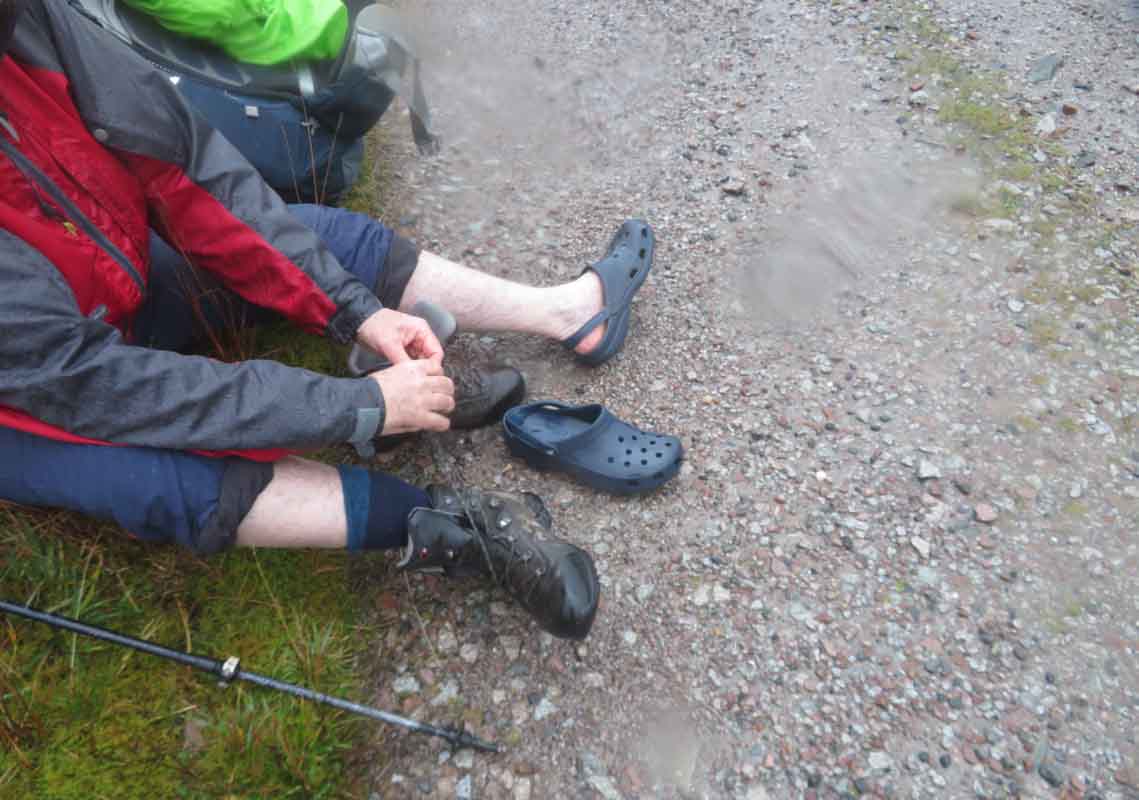


John managed to keep his socks and boots dry by changing into plastic footwear for the stream crossing whereas I just waded over, knowing I had spare dry socks left in my rucksack for the next day. It was also raining heavily, very dark, and I couldn't be bothered faffing around in bare feet.


 Twin waterspouts.


The bothy was finally reached around 8:00pm on Friday night. A much easier walk in than the one two bothies ago and a couple of years back when I crashed unexpectedly through ice in the dark into a waist deep swamp then had a trackless void to negotiate into that other bothy as my torch was damaged down to glow worm brightness when it was submerged under the water. Lesson learned I now carry two torches, two fresh batteries, and a compass and OS map as that solo wander/ navigation in almost total darkness over unseen half frozen bog ridden terrain in a true mountain waterlogged vastness is not one I'm keen to repeat any time soon.
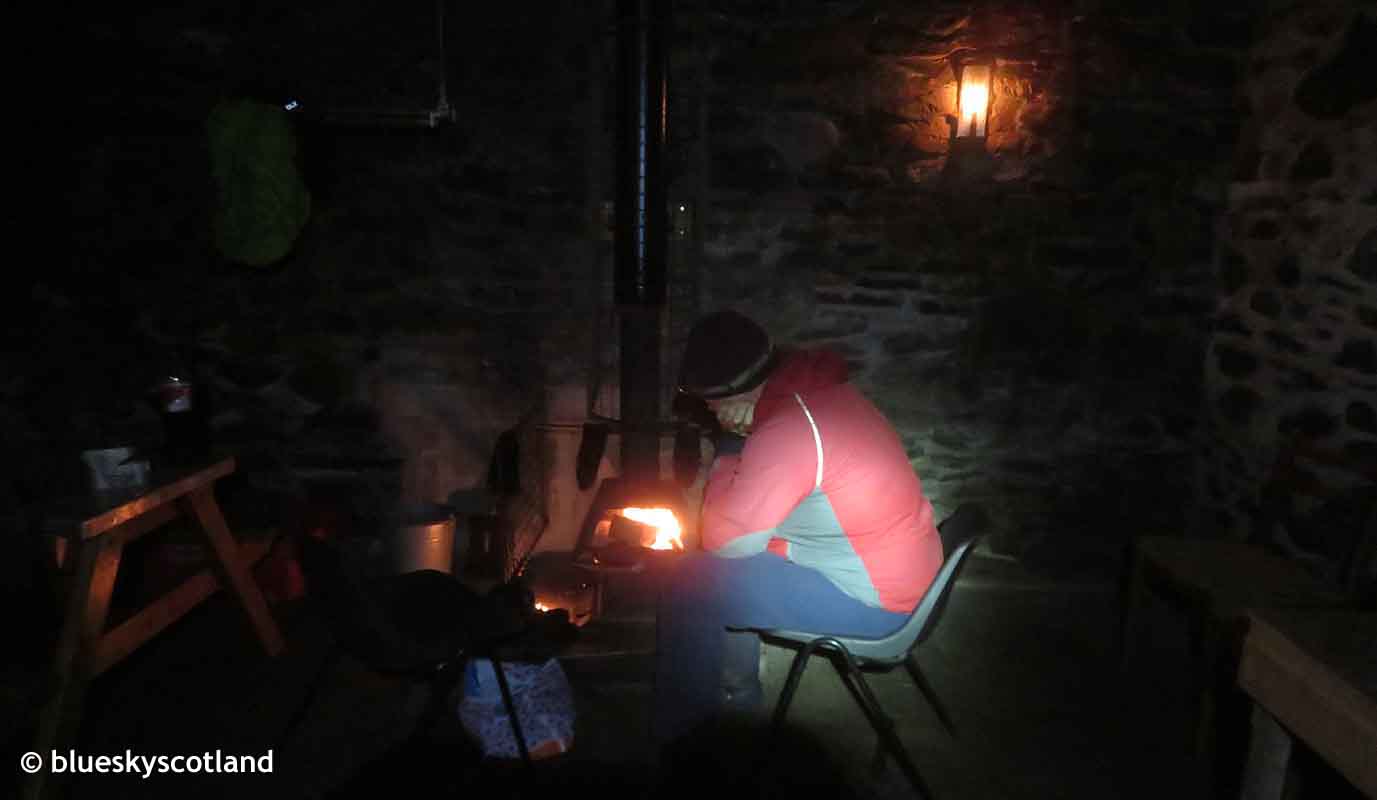


Although it doesn't look it in this photo we had a pleasant evening in the bothy, cooking a meal then settling down in front of a wood burning stove with a couple of candles. As experienced bothy veterans we always carry in firelighters, kindling, logs, or coal... plus a few candles for extra lighting as this means a cheery night instead of a cold, dark, miserable one. Incidentally, Hollywood A lister Scarlett Johansson found herself in a similar local bothy to this one, about a dozen miles away, when filming Under The Skin. Other local Scottish highlights she visited included a petrol station in Wishaw, the glitzy charms of Port Glasgow ( Scotland's Las Vegas) a frozen remote beach, and Celtic Park... all under the cover of darkness... in winter. Yet of the trilogy of films partly shot in Glasgow that year (2011) Cloud Atlas and World War Z being the others... Under the Skin is easily the most interesting, underrated, and strangest. Worth a watch if it's on TV.
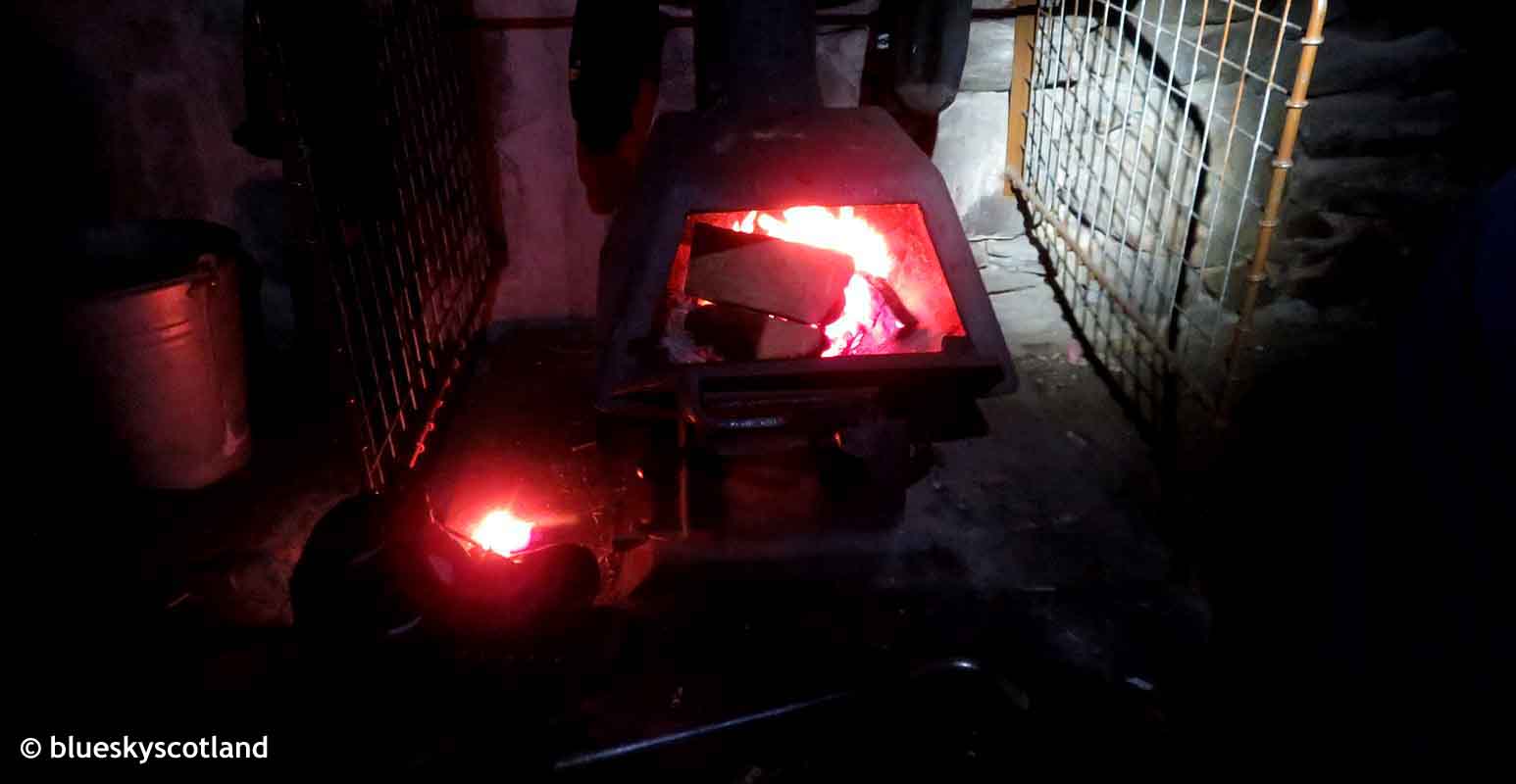

The bothy stove. It may be economical but I'm not really a fan of bothy stoves as I much prefer a traditional open fireplace in bothies and a coal fire. A bothy without a source of heat in it is a cheerless  stone fridge in winter but some stoves I've seen in bothies do not allow you to open the front except for putting wood in. This one did stay open as apart from heat you really need that focal point to stare into to enjoy a good evening. It's what bothy life is all about. This was pleasant but in a coal fire, impurities in the coal and shifting embers always create an ever changing tapestry of different small visions throughout the night- dragons, dogs, strange sinister tiny humans... everything in the coals... that I'm sure inspired and nurtured our primitive ancestors imagination, 'the race collective memory' as I've speculated before on previous bothy trips. It is an early form of television, a focal point for any group or individual, that apart from keeping tribes/humans warm and safe from night-time predators was/would be a major backdrop part of any story telling evenings and shared cultural identity. Something we lost when we changed to electric or gas fires after the clean air acts in the late 1950s and 1960s. I remember my family sitting around many a coal fire and candles during power strikes and as a child and teenager which was something of an adventure then so it's always remained a treat for me. Even in the later Broons annual books some calamity or other used to regularly occur in that fictional household so that they had to revert to that bygone age of coal fires and candles, (without smart phones, electric light or central heating,) as fondly remembered by certain age groups or as mythic-ally re-imagined /faithfully recreated by current millennials and others in much the same way as the 1960s musical era is revered even now by post 1960s generations that didn't experience it first hand but sometimes craved to do so... and be there.


Wood doesn't have that visual kaleidoscope to the same extent as coal but it was still a good night in a decent bothy and John provided musical entertainment in the form of a smart phone juke box collection of artists I was unfamiliar with. Highlight was the Irish modern folk band Lankum, which I looked up later. Never heard them before but I liked them. Didn't think they sounded anything like the Pogues- more like The Velvet Underground John Cale era or Scottish band Arab Strap in that they used slow drones, viola and fiddle/violin to great effect as a complement to storytelling ballads. Dark themes that suited a dark bothy... warmed and lit by stove and candles alone. Flickering shadows and dainty little bothy mice huddled quietly around the edges of the glow...  heating up... but listening also.

https://en.wikipedia.org/wiki/Lankum


We were lucky it was a mild night in late November instead of the current - 10 deep freeze conditions of early December as the stove greedily burned up wood fast even with the front closed up yet didn't put out much in the way of heat into the room. John was ok in the sleeping platform next door, well away from any fire but I stayed beside the stove all night as I only had a three season £30 sleeping bag with me. My four season very expensive bag having at last succumbed two years ago to frequent use/ abuse getting in and out of it house telly watching on the sofa to save big heating bills arriving. With a burst zip and £100 plus to buy a new four season winter bag I've not got around to that yet. It cost over £100 in 1980 for a good 4 season winter sleeping bag so hate to think what price they are now. Anyway, another enjoyable bothy trip.


The journey back near Arrochar village. Typical grim West Highland weather in early winter. When I got back, inspired by my bothy night, I bought a large bag of tea lights for £1 so I now have two candles per evening watching telly with the lights off... any fire risk lessened by placing them on a large metal tray in plain sight at all times. No coal fire but nearly as good as a bothy.
 

And I know a candle song.

https://www.youtube.com/watch?v=9FttNi9-S1E 

Wednesday, 30 November 2022

Cambuslang and Castlemilk Day.


 Another trip out to Cambuslang, this time on a good day, and a hill and a park I'd not visited before.


Cambuslang Main Street is unusual in that the one side of it, facing south, consists of a long line of traditional stone tenements from the  late 1800s - early 1900s era with a similar long line of shops underneath similar to Byres road or Dumbarton Road in Partick or most other older town centre districts along with the usual collection of public buildings in the nearby back streets.


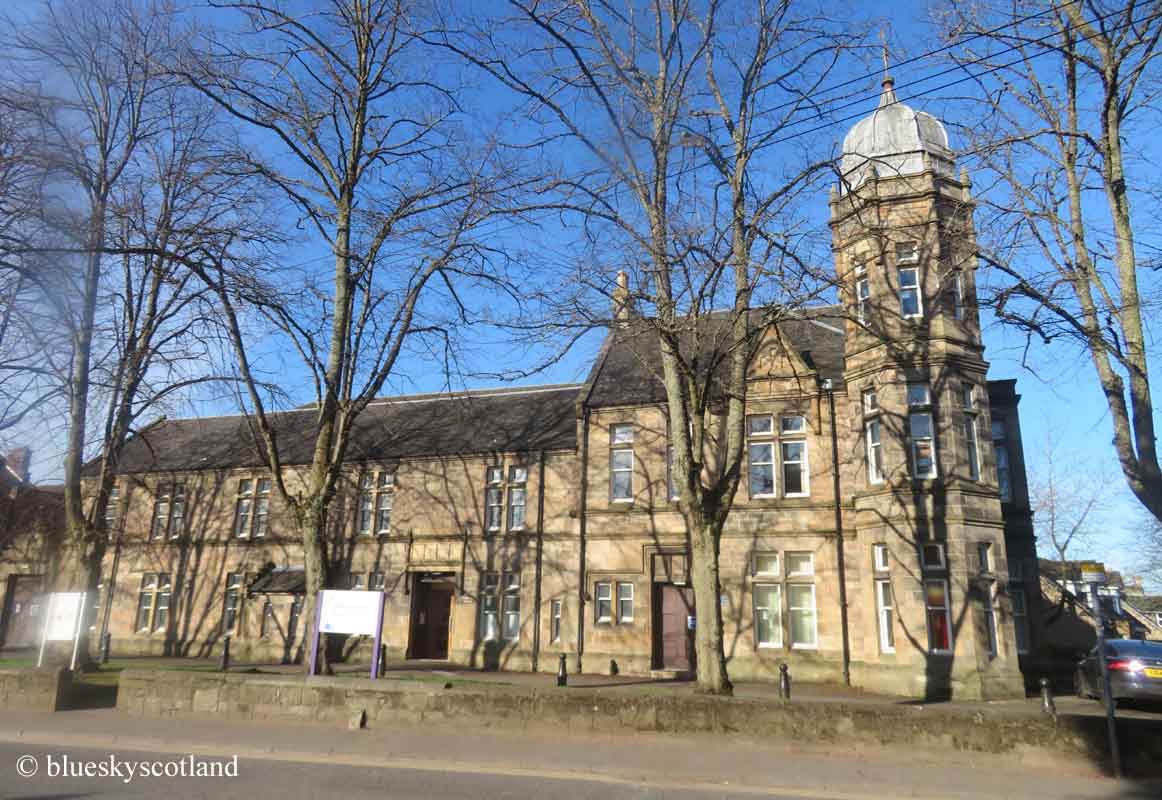
 Cambuslang Public School here, built in 1882, as you can see in the 2nd photo up.


 Cambuslang Institute.

 A beautiful period church just past Cambuslang train station but like a lot of churches no longer used for its original purpose.


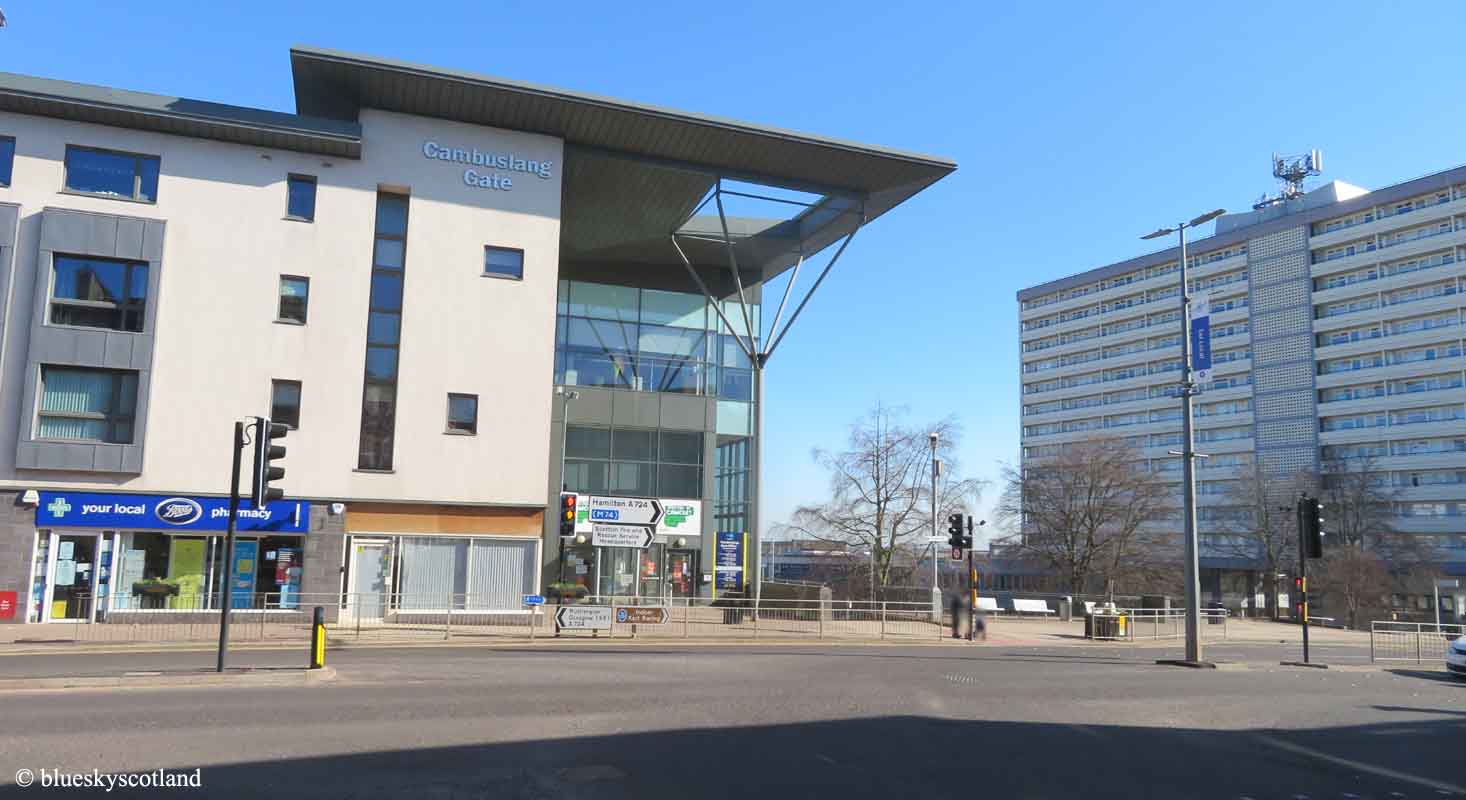
The other side of the main street is completely different however, as you can see here in this distance shot. Not sure what stood here before, small industrial works maybe, but in the 1960s- early 1970s this side of the street was cleared to make way for a Le Corbusier style complex of high rise towers and lower level maisonette apartments.


Hi rise complex here.

 Swiss born architect Le Corbusier was very influential during that period and his idea of 'a radiant city where people would live like wine bottles stacked in racks' was all the rage, particularly in Glasgow. His original projects are still standing that he constructed in Europe, especially when occupied by young professional types and families without children between 5 and 30 years of age but scaled up to house many thousands of ordinary citizens on lower incomes with growing children many of these high rise estates built throughout the UK and inspired by this concept had a troubled existence before being abandoned and flattened for lower level housing.


This one seems to have fared better than it's Glasgow doplegangers, many of which have been demolished and are slowly fading from memory and history. ( Cambuslang comes under South Lanarkshire council, not Glasgow) As such it always looks well maintained with few signs of vandalism or graffiti.


A shopping centre hidden away on the modern side of Cambuslang Main Street.

The high life.


Cambuslang Main Street, facing north.


A comfortable bench/sculpture in 1960s style modern Cambuslang.... when concrete was a groovy material to work with. Dali's 'Soft Watches' painting comes to mind here. You can see a section of the traditional stone tenement style of Main Street in this one.


On the drive back to my house I stopped off at the start of King's Park Avenue as I realized I'd never been in Overtoun Park or Rutherglen Cemetery and both, being on hilltops would have good views. The main view from the Rutherglen Cemetery hilltop was of Castlemilk, one of Glasgow's big four council estates. all of them built around the 1950s and 1960s period when Glasgow still had close to one million citizens and a real shortage of new housing. 


Castlemilk and the Big Wood. Like Pollok and Drumchapel Castlemilk was constructed on the former grounds of large private estates with plentiful farmland attached and you can still see traces of it as you walk up the scenic Castlemilk Glen where the grand mansion of Castlemilk House once stood. Link here.

https://en.wikipedia.org/wiki/Castlemilk_House
 

As a teenager I was not only fascinated by the history of all these areas but also by their current location. I had not visited or explored Castlemilk at that point but I had heard plenty of rumours about it as it was fairly notorious for gangs and wild times from the 1960s to the 1990s era. Going to Langside College during my apprenticeship I met a few classmates who came from this area and they invited me to hang out there on a couple of occasions. Always curious and keen to see new places I didn't need to be asked twice. Like Pollok and Drumchapel the various tenement housing clusters sat apart, separated by wooded gorges, rough uneven/ boggy ground or some other natural feature like a stream bed or pond that stopped continuous housing development end to end. So there was always plenty of nature around. Heaven... and hell... side by side.... And wild beyond belief. Castlemilk covers an area 12 times larger than the nearby King's Park or 12 times the size of Kelvingrove Park or Queen's Park. It's a sizable place. An area with a lot going on so it's never dull or boring. Not for a visitor anyway.


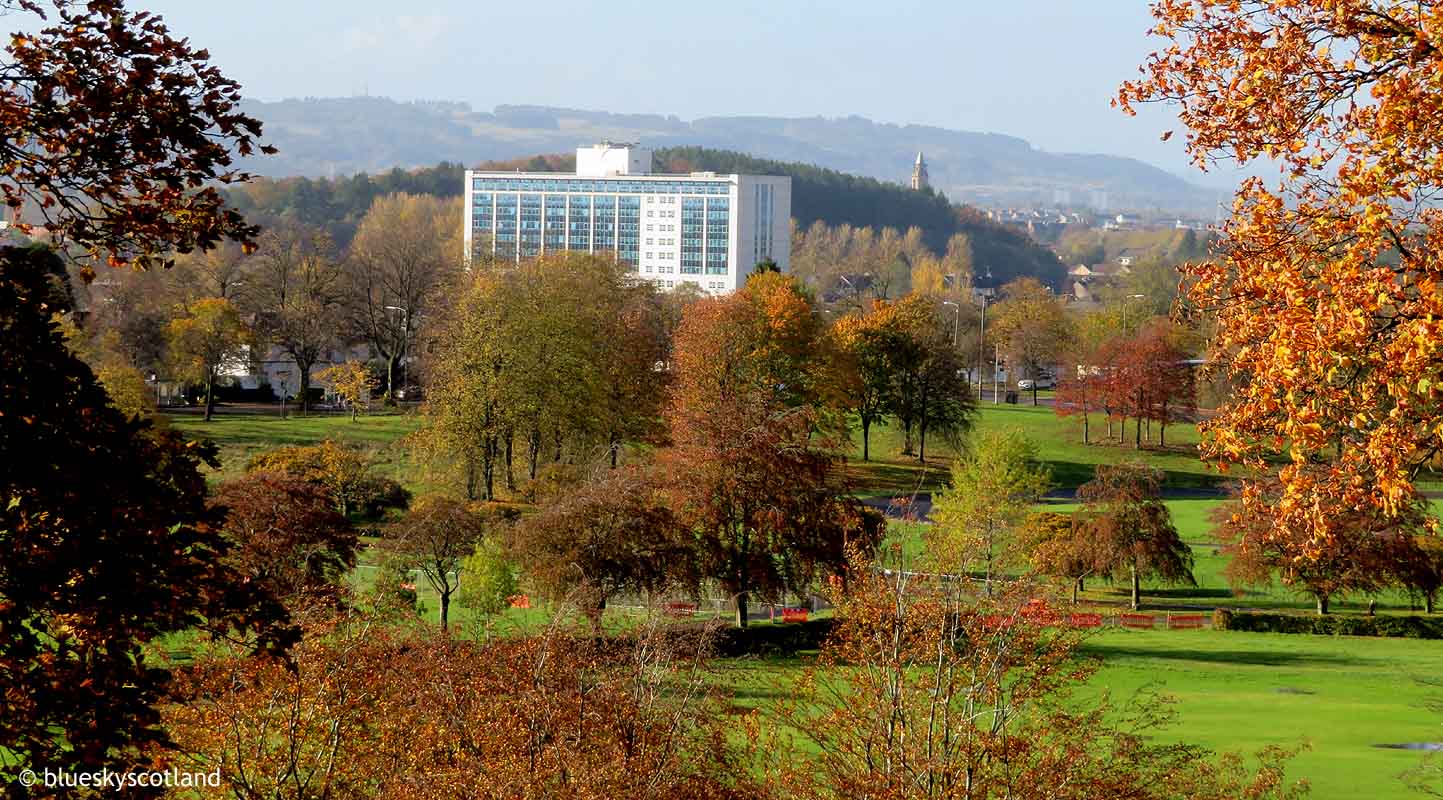
It's very different now of course, 50 years later, with a much more diverse and better constructed/ maintained/ refurbished variety of housing stock but back in the 1970s, when I first visited, if it was placed on a medieval map 'Here be dragons' would be marked across this rising slope in bold letters, or any of the other big four estates at that time, one at each corner of Glasgow. I've only explored or worked in Castlemilk around 30 times in total over the last five decades but every single time has been very memorable. Fascinating, impressive and exciting. A real thrill. The City of Glasgow and the Campsie Fells seen from Rutherglen, Overtoun Park, below.


 By the 1970s and 1980s Glasgow had some of the worst housing estates in Western Europe so you could say I was in the right place at the right time as I have hundreds of memories of trips and encounters back then... as exciting and terrifying as any rock climb or mountain day. With the bonus of being only a bus ride away. If you want to know what the tenements looked like then just type in Castlemilk. Glasgow. 1980s.  Long rows of identical four storey grey tenements climbing in rectangles and squares dancing up rising slopes like terraces in a football stadium. As the years and decades progressed, just like my own estate, more graffiti and vandalism occurred until by the 1980s and 1990s many houses and even entire streets lay empty and deserted, taking years to get knocked down. Once you accepted a house in one of these vast estates it could be very hard to get out again, thanks to the points system, so for many folk, myself included, after almost 30 of scheme/large housing estate life, a gradual disappearance of surrounding tenants and vacated buildings meant an escape route and a move elsewhere. I consider myself very lucky however to have seen estates like this one all over the UK within that time period as nothing like them exists today.... and they could be exciting. Modern day dragons. Yet even in the 1980s, the Thatcher decade of mass unemployment, heavy industry and local factory collapse, the rise of discredited trickle down economics and the austerity measures still in place today I do not recall any mention of food banks, not one... or of seeing dozens of rough sleepers in every town and city apart from a few older drunks floating around, as we still presumably retained a better level of public service infrastructure back then offering places where they could go. Before that too was dismantled or privatized. During my first apprenticeship year I received a wage of £8 a week yet many household items were far more expensive then than they are today, 50 years later. Televisions, cookers, fridges etc are probably cheaper now than they were then, compared to wages. Many times more in those days. I still have old paperback books marked £6.99 and 10.99, or £12 for CD's/DVD's which I bought 20- 30 years ago at full price brand new that I can now get second hand for 50 pence or one pound for six today. Most ordinary working class folk were poor, goods were very expensive, and many houses could only afford to heat one room in the winter months. No central heating either. Very few gadgets in rooms. Yet no food banks? even for households that didn't have any carpets, just lino, old rugs, or bare floorboards. Weird. ( Foodbanks only arrived in the UK around 2008 ish apparently.) Heating the house and car travel does seem more expensive now due to current fuel costs and staying somewhere once you get to your destination can be pricey but food, shoes, clothing and many other items, up until recently, was much cheaper. So how on earth did we manage to survive all those decades without food banks in every city, town and village? A complete mystery...


Cathkin, Fernhill, and the Cathkin Braes offer other walks/ housing schemes in this area and I've had many visits here as well over the decades. I remember a line in a film. 'The secret to a happy life is to find something you enjoy doing then pursue it over a lifetime or until you loose that thrill and discover something else.' I've never lost that thrill... which is just as well given that I've never had the disposable income for big exotic trips abroad anyway...or the inclination to go there.... when I could have five budget camping or backpacking trips around Europe for same price as one expensive trip further afield. Another secret to a happy life is to discover contentment and adventure in your own back yard....and make the most of what you do have.


Sunday, 13 November 2022

Bellahouston Park. Queen's Park. Shawlands. A Glasgow Autumn. The Grail Quest.

                                                ALL PHOTOS CLICK FULL SCREEN


If anyone is still puzzled why I loved spending my childhood and young adult years in Pollok and Nitshill this photo of misty ridges, short grass meadows and broad leaved woodlands should provide the biggest clue. I've had urban walks all over Glasgow but very few have the sheer variety and feel of the wild as here. This view, believe it or not, is taken from the middle of a large city, looking south west across it, from Bellahouston Park in fact, yet all you can see here is the forest and various open ridges I grew up within. No wonder then when I read the Lord of the Rings at 13 it made a huge impression on me as that's a book about small settled communities in the semi mythical medieval past surrounded by deep mysterious forests, pleasant farmlands, high mountains, caves and rivers. Forget Dwarfs, Elfs and Goblins. It's a book primarily about different ancient peoples, customs, and landscapes.... a deep love affair with the outdoors... a grail quest..... and sheer imagination........... and looking at this misty morning view...in October 2022.... I would be happy to do it all over again... from the beginning. Not the book... my life here.

 Mosspark and the Brownside Braes. I've also walked in several flat urban districts over the last few years where I've been fairly bored... no thoughts of wonder, distance views, or mystery at all...Merrylee, Newlands and Cathcart spring to mind. Not a usual occurrence for me in any city. I never even posted those days out despite taking enough photographs for a blog walk. Uninspired. Well heeled and perfectly pleasant districts to live in they may be but they never change and nothing much happens there since the day they were built in the 1900 to-1940s, no distance views available of real life 'sunlit uplands' either to enrich the soul or mind as that's the only version most ordinary folk will get.....and to sustain that comfortable middle class lifestyle a parental expectation perhaps of a 40 to 50 year professional career that's possibly well paid but equally dull in large parts unless something remarkably different occurs. (or so I thought walking round them.) Maybe that's unfair and not the case at all but that was my general intuitive impression looking around, flat street by flat street. By contrast rough areas do change, all the time...from good to bad then flattened altogether....., and they can be unpredictable and exciting- depressing, dangerous, or frustrating: in constant flux year by year... folk move in/out/ scattered about, then travel back years later to see it completely transformed and then reminisce about how good the old one was. But looking at this view of Mosspark and the Brownside Braes, above,  in 2022, the only thing I'd change is my age.... to go back to childhood again... and do the exact same things that gave me endless pleasure the first time around. Every weekend to have a brand new adventure outdoors, to see what's over that ridge, wonder about the view from that highest hill in the distance, what secrets lie within that far off wood? If there's only a dozen or so truly original stories in the world then  'The grail quest' and 'The girl in the tower' are the ones that's motivated me the most throughout my life. It doesn't really matter if you find what you are looking for as it's the search itself that gives you the most pleasure. A sense of purpose and a passion easily identifiable with 'American Pickers' where folk that collect junk sell a few items now and again then immediately hunt for some more to replace them with any money they get because it's the search that's the real golden ticket. Not the money itself.

The tower and the raven. Seeing as how I've never had much money anyway and was never likely to acquire any in meaningful substantial amounts that would change my life, given my impoverished background and lack of any talent/intelligence I had already won a golden ticket growing up right here. From a very early age fantasy tales made perfect sense to me. There might well be a girl in this tower if I arrived there (there was but no visible spark ignited between us) and what secrets did lie along that wooded ridge in the distance?..... or who lived in that far off house on the horizon? I know the answers to these questions now of course but I'd wipe everything clean and start again, no problem, to get back to that original blank map to fill in gradually, piece by hard won piece. Maybe that's the real purpose of our existence. To fill in the blanks on the map. True, folk from a more privileged background  may have the funds to travel to more exotic places and afford better and bigger luxuries but looking back now my greatest gift then was a lack of expectations and drive from my parents as to a future career or being clever enough at school to be deemed remarkable in any way. I was ordinary... and so saved myself from a life of striving to achieve something in a work related way... which is a grail quest in itself of course... but not for me. I therefore had a precious freedom leaving me open to create my own destiny. And luckily, one that could be achieved at bargain prices given a few unavoidable compromises. 


A beautiful sunny autumn day in Bellahouston Park so I invited Anne along.


Mellow yellow. A few occasional song titles intruding in our grace of passage through these noble lands.


Garden in the City. Queens Park. Glasgow.... a photograph inspired by a Melanie Safka song and LP album cover of Central Park I still have from the early 1970s in my vinyl collection. Folk singer Joan Baez and Melanie being two early 1960s/ 1970s artists I liked around 12/ 13 years of age which predated the  Velvet Underground, Bolan, Roxy Music, Curved Air and Bowie phase as a more subversive mid 1970s  art rock, long haired, hormone driven teenager developed by the time I went to the nearby Langside College. Especially songs like Silver Dagger, The Silkie (of Sule Skerry) and Bobbie Gentry's Ode to Billie Joe, which was my first real introduction to the mysterious wonder and power contained in traditional story telling ballads. Gratefully saving me, incidentally, from 'Donald where's your Trousers?'  type folk music ubiquitous at that time on Scottish Television programmes watched by my different generation parents with its bagpipes, heather and haggis stereotype still lapped up by tourists today. It was a scratch and sniff album cover supposedly rendered to give you a scent of the  flowers in New York City park lands. Still works 50 years later.... though it never really smelled of flowers, only cheap perfume of some vague description. But hey! Still working faintly half a century later! Come on! Might outlast Melanie herself at this rate! ( in one of those strange coincidences that nevertheless frequently occur I dug out that album to look at, (and scratch and sniff out of curiosity,) then later on just happened to be watching the first episode of 'The English' with Emily Blunt which faded out with Melanie's 'Some say (I got devil)' after not thinking about her or hearing her music on TV or radio for several decades.) Spooky stuff....happens all the time though.


Barclays Bank complex from Queens Park. Orange and dark green towers are part of it as well.


M8 Motorway and Scottish Power building from Queen's Park.


One of the reasons we included Queen's Park in our day out was for the city views from the flagpole high point. The closest Glasgow can get to Edinburgh's Arthur's Seat viewpoint, as in... seeing most of the city spread out below from an elevated hillside. As a compensation for not having castles, cobbled streets, or volcanoes within it's city limits Glasgow does have dozens of smaller hills open to public access, many of them parks. University of Glasgow here.


City Centre district around George Square. City Chambers visible ( stone spire on right) Yellow fins in middle denote new building constructed recently.


Glasgow's financial district.


Park circus towers and new building going up. It's been a while, pre pandemic maybe, since either of us has visited Queen's Park.


Different view of it.


Part of Glasgow's east end from the Royal Infirmary to St Joesph's Tower where an old folk's home run by nun's and a convent once stood, continuing this medieval theme (French order: The little sisters of the poor) I've been up that tower as well ( I get around I do) but not to rescue anyone.  Notably fewer small wooded hills and far less trees overall in this eastern half of the city. The hi rise flats of Royston behind and other tower block clusters providing the best view points although access can often be problematic.


Close up view of Glasgow's financial district. Tightly packed.


As a contrast looking in the other direction. Shawlands Cross and Pollok. The beautiful south.


Langside halls. Shawlands Cross. Amazingly a building moved from Glasgow's city centre district out to here. To Victorian drive and ambition few things were impossible. Started out as The National Bank of Scotland in Queen Street but ended up here. Hard to believe. And Anne didn't :o)  Remarkable story and photos in link below. See. Told you :o)

https://www.glasgowlive.co.uk/news/history/glasgows-historic-langside-halls-moved-22447373


We did not intend doing a Shawlands mural trail but just stumbled across a few down a nearby cul de sac. An abstract one here. A painter painting. Early selfie I presume.


Orangutan.


 Wall mural. All found down a lane beside Queen's Park entrance near Shawlands Cross. Public toilets building across the road also found here in the rosy tinted past but now converted into a cafe/coffee/ restaurant building, presumably holding toilets within just for customers which kind of sums up what's happening to most public services UK wide. Either closed completely or turned into some kind of private enterprise where you have to pay for what used to be free. Like local swimming baths that closed decades ago. I would go swimming now or participate in a lot of other things if they hadn't all disappeared during the last 20 years and with another 20 years of continuing austerity to come, due to 'the big lie' of a 60 billion financial black hole, (which may or may not exist according to how you count it up. Lie, dammed lies, and statistics!) it's happy times ahead, as usual, for the long suffering general population.


 The colours of autumn in October 2022.


'Elephant in the room'  Bellahouston Park.


Japanese red maple. House for an art lover.


A gathering of females. House for an art lover.


Red theme at Bellahouston Park.


Late October sunshine in Bellahouston Park. 2022.


 A battered old knight happiest in a broad leaved wood. Having grown up there. Exploring. A girl in a far off tower to reach... to give some purpose to a quest..... after many valleys and ridges and high mountains to cross. My own life story perhaps?  The glorious journey. And like any highly addictive sense of purpose you never want it to end ....only old age and death gets in the way of it. Born again I'd do the exact same thing again.